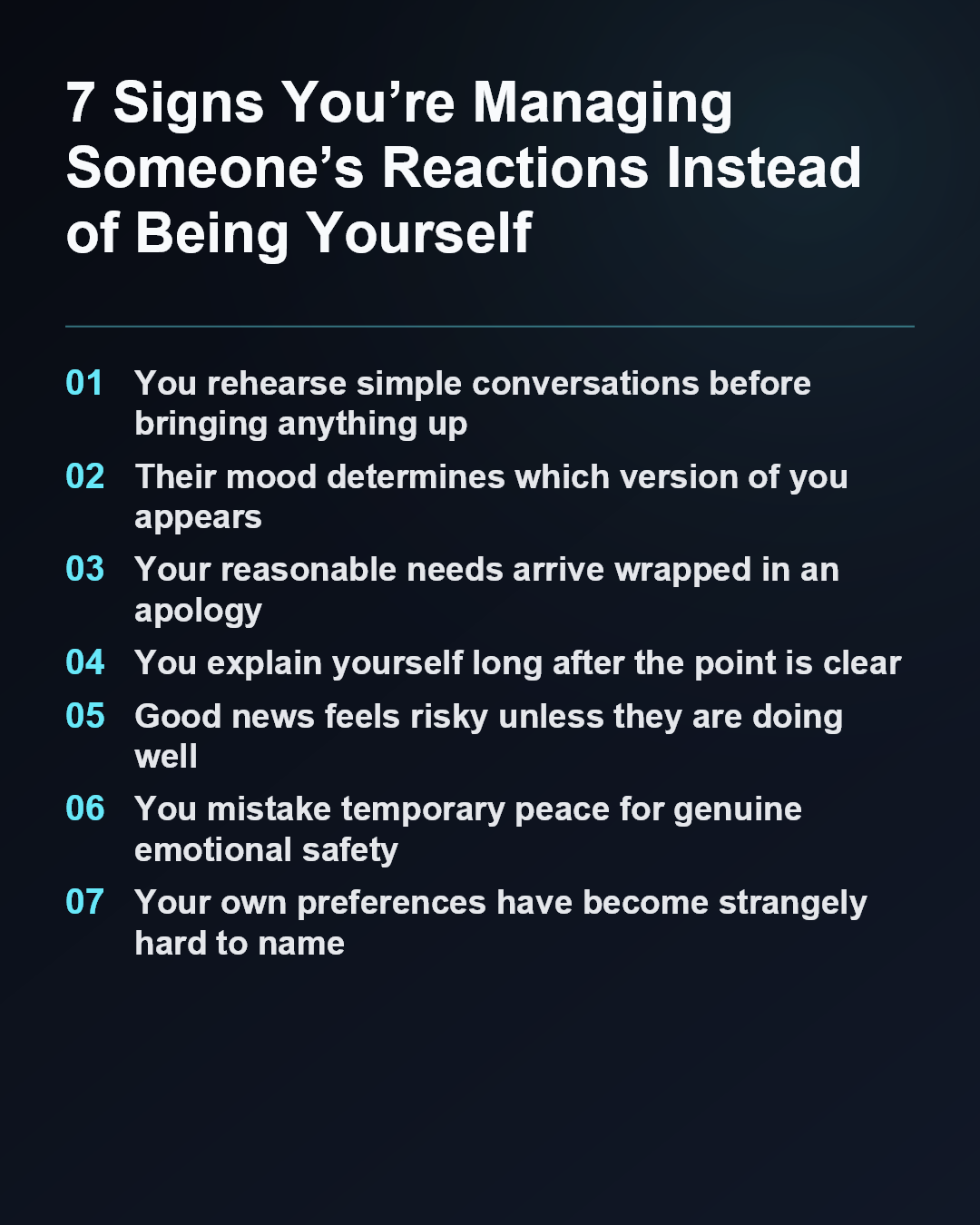
7 Signs You’re Managing Someone’s Reactions Instead of Being Yourself
You mentally test different openings, predict objections and prepare evidence before mentioning something ordinary. Even asking for a quiet evening can feel like presenting a legal case.
Planning difficult conversations is normal. But when nearly every honest exchange requires rehearsal, you may be focusing more on controlling the other person’s response than expressing yourself. Try writing your message in one clear sentence. Notice whether the fear comes from the subject itself or from how you expect it to be received.
You enter the room, read their face and adjust within seconds. If they seem irritated, you become agreeable. If they are withdrawn, you make yourself entertaining. If they are pleased, you finally relax.
Sensitivity to others is valuable, but constant emotional shape-shifting is exhausting. Before automatically adapting, pause and identify your own mood. Ask yourself what you would say or do if you were not responsible for changing the atmosphere. Their feelings can matter without becoming your instructions.
You say sorry before asking for time, help, privacy or consideration. The apology is meant to soften the request and reassure the other person that you are not demanding too much.
This habit can quietly teach you that having needs is a disruption. Practice replacing the apology with appreciation or directness: “Could you handle dinner tonight?” instead of “Sorry, I know you’re busy, but…” A respectful request does not require you to confess wrongdoing first.
A simple decision becomes a detailed defense. You provide context, timelines and repeated reassurance, hoping enough information will prevent disappointment or criticism. Yet the extra words often leave you feeling less understood, not more.
Overexplaining can be an attempt to secure permission rather than communicate. State your reason once, then stop. For example: “I can’t come tonight because I need to rest.” The discomfort that follows may reveal how accustomed you have become to treating your boundaries as negotiable.
You hesitate to share praise, opportunities or happy experiences when the other person is struggling. You may minimize your excitement so they will not feel threatened, excluded or left behind.
Consideration is healthy; routinely shrinking joy is different. A close relationship should have room for uneven seasons without turning one person’s happiness into betrayal. Share good news without exaggerating or apologizing. Then observe whether the other person can acknowledge your moment, even when their own day has been difficult.
When tension ends, the relief can feel so powerful that you assume the problem is solved. But sometimes peace only means you stopped raising the subject, accepted the blame or abandoned what you wanted.
Genuine safety is not simply the absence of conflict. It includes the ability to disagree without humiliation, threats or emotional punishment. After an argument, ask what created the calm: mutual understanding, or your surrender? The answer matters more than how pleasant the next few hours feel.
When someone asks what you want, your mind goes blank. You know what will keep things easy and what the other person prefers, but your own answer feels distant. This can happen gradually after many small acts of self-editing.
Rebuild that connection in low-stakes situations. Choose the film, meal or weekend plan without first predicting anyone else’s reaction. Small preferences are not trivial; they are everyday evidence that you can remain connected to others without disappearing from your own life.