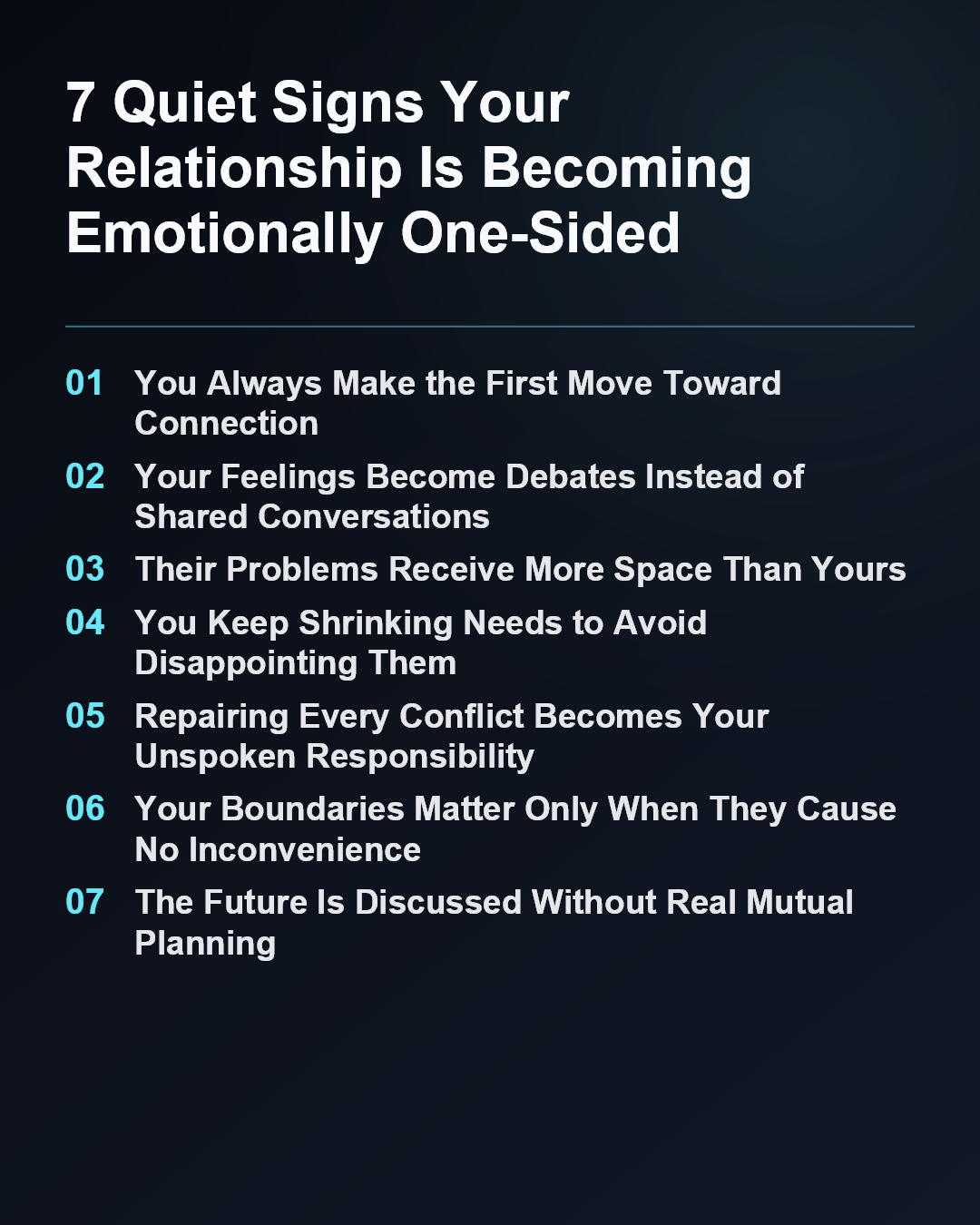
7 Quiet Signs Your Relationship Is Becoming Emotionally One-Sided
You initiate the meaningful conversations, plan time together and reach for affection after difficult days. If you stop, the relationship seems to go emotionally silent.
Taking initiative is not a problem when effort naturally shifts between partners. The concern is a pattern in which connection depends almost entirely on you. Step back from automatically filling every gap, then calmly discuss what you notice. A partner who cares may not realize how passive they have become.
When you say something hurt, the conversation quickly turns into an argument about whether you should feel hurt at all. You end up defending your emotional reaction while the original issue disappears.
Healthy disagreement leaves room for two experiences to exist at once. Try describing the specific moment, its impact and what you need next time. If your partner consistently focuses on disproving your feelings rather than understanding them, emotional safety can slowly erode—even when the relationship looks calm from the outside.
You know every detail of their stressful meeting, family conflict or bad day. Yet when you begin sharing your own struggle, the subject changes, the response feels rushed or you find yourself comforting them instead.
Support does not need to be perfectly equal in every conversation, especially during a crisis. Over time, however, both people should have room to be heard. Notice whether they ask follow-up questions, remember important details and return to unfinished conversations without being repeatedly prompted.
You say you are fine with cancelled plans, limited affection or inconsistent communication because asking for more feels risky. Eventually, being “easygoing” becomes a way of making yourself smaller.
Compromise is healthy; self-erasure is not. Start naming needs in clear, modest language rather than waiting until resentment builds: “I need earlier notice when plans change.” Their response matters. They may not grant every request, but they should be willing to discuss your needs without mocking, punishing or dismissing you.
After an argument, you are the one who breaks the silence, softens the mood and proposes a solution—even when you were the person harmed. Peace returns, but only because you carried both sides of the repair.
Conflict repair should involve mutual accountability. Before rushing to restore comfort, allow your partner an opportunity to return, reflect and acknowledge their part. This is not about withholding affection as punishment. It is about discovering whether they can help rebuild closeness without depending on you to do all the emotional labor.
A boundary may be accepted in theory but challenged the moment it affects your partner’s preferences. They respect your need for rest until you decline an event, or support your privacy until you refuse to share a password.
Boundaries become meaningful precisely when they create limits. State yours simply, without turning it into a long defense, and follow through consistently. A caring partner can feel disappointed and still respect your decision. Repeated pressure, guilt or retaliation reveals that their comfort is being prioritized over your autonomy.
Your partner speaks warmly about future trips, homes or milestones, yet avoids concrete conversations about timing, responsibilities and compromise. The dream sounds shared, but the planning remains vague—or assumes you will adapt around their choices.
A mutual future requires more than affectionate language. Ask practical questions about priorities, location, finances, family and daily life. You are not demanding certainty about everything. You are checking whether both people can shape the direction together, rather than one person imagining a future the other must simply enter.