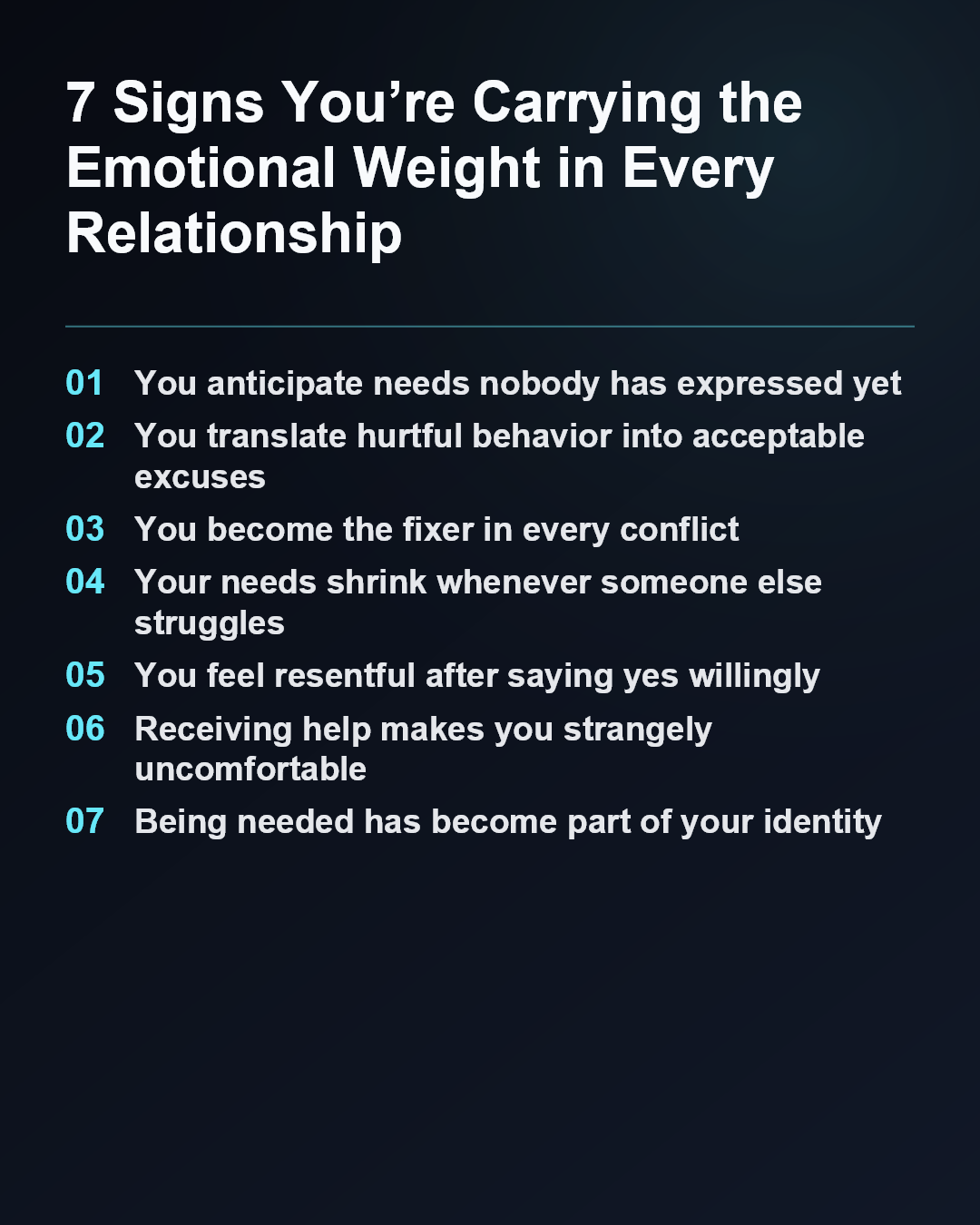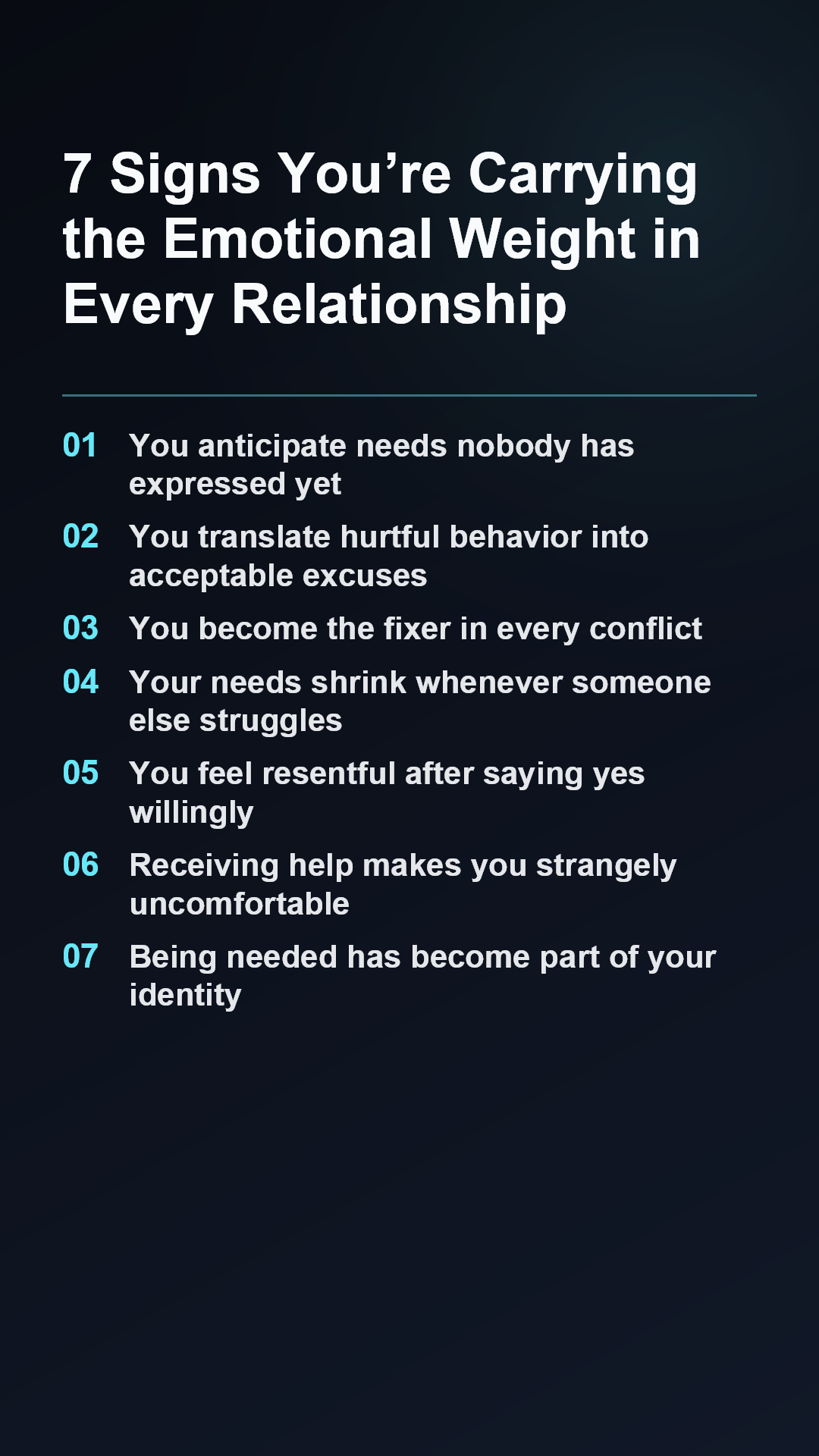
7 Signs You’re Carrying the Emotional Weight in Every Relationship
You notice every shift in mood, remember every preference and act before anyone asks. This can look like exceptional thoughtfulness, but it may also keep you in a constant state of emotional surveillance.
When you automatically prevent disappointment or discomfort, other people never have to communicate clearly. Try pausing before stepping in. Ask yourself whether help was requested, whether the situation is truly yours to manage and what might happen if you let someone voice their own needs.
Instead of acknowledging that someone was dismissive, unreliable or unkind, you immediately explain it for them: they are stressed, busy, afraid or having a difficult week. Context can create compassion, but it does not erase impact.
If you routinely build the case for why other people should not be held accountable, your own hurt gets pushed aside. Practice naming both truths: they may be struggling, and their behavior still affected you. Understanding someone does not require abandoning your standards.
When tension appears, you are the first to call, clarify, apologize or suggest a solution—even when you did not create the problem. Restoring peace may feel safer than waiting, but it can turn reconciliation into a one-person job.
Before repairing the next conflict, notice who is taking responsibility and who is simply waiting for you to make things comfortable again. Healthy resolution requires participation from both sides. Silence is uncomfortable, but sometimes it reveals who is willing to meet you halfway.
A friend has a crisis, a partner feels overwhelmed or a relative is upset, and suddenly your exhaustion no longer seems important. You postpone difficult conversations because there is never a convenient time to need something yourself.
Compassion should not require self-erasure. Your needs can remain valid while someone else is hurting. Start with one direct sentence instead of a long justification: “I care about what you’re facing, and I also need us to discuss what happened.” Both realities can occupy the same room.
Resentment often appears when your spoken answer and your honest capacity do not match. You agree to help, listen or rearrange your plans, then feel invisible when nobody recognizes the cost. The problem is not always that others ask too much; sometimes they have learned to trust a yes that conceals a no.
Treat resentment as information rather than proof that you are selfish. Next time, pause before answering. A delayed, limited or respectful no can protect a relationship better than reluctant generosity.
You may be generous with time and care yet tense when attention turns toward you. Perhaps you minimize your problem, repay favors immediately or insist that you are fine. Giving keeps you competent and in control; receiving asks you to be visible without performing usefulness.
Experiment with accepting small acts of care without deflecting them. Say thank you instead of explaining why you did not need the help. Mutual relationships require enough trust to lean as well as support, even when leaning feels unfamiliar.
The deepest sign is not exhaustion but fear: if people no longer depend on you, will they still choose you? When usefulness becomes your route to belonging, boundaries can feel like rejection and rest can feel like neglect.
Notice which relationships remain warm when you are not solving, organizing or absorbing distress. Begin offering presence without taking ownership: listen without rescuing, care without managing and let others face manageable consequences. You deserve connections built around who you are, not only what you carry.